By how much does the braking distance increase in the rain compared to a completely dry road?
Human factor: Reaction, braking, and stopping
Explanation
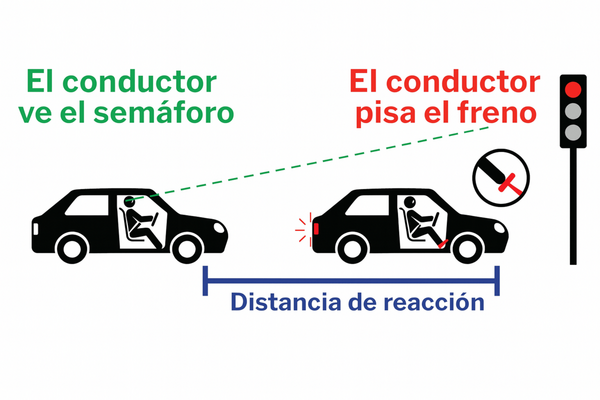
The **braking distance** is the space a vehicle travels from the moment the brake is applied until it comes to a complete stop. This distance can vary due to several factors, such as **speed**, **vehicle load**, **technical conditions** (such as the state of the brakes and tires), **weather**, and **road conditions**.
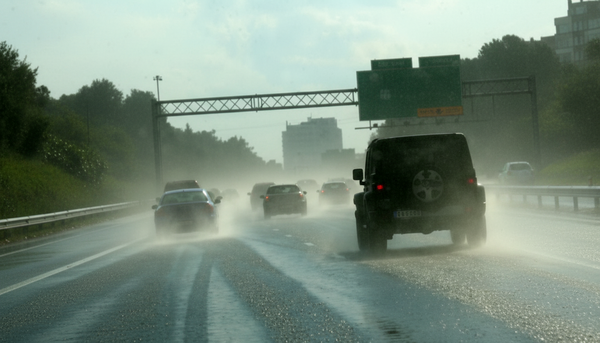
When it rains, **tires have less grip** on the road, meaning the vehicle needs more space to brake. This is because water reduces the friction between the tires and the road surface, thus increasing the braking distance.
In rainy conditions, it is important to take additional precautions, such as keeping the tires in good condition, braking gently, and maintaining a greater distance from the vehicle in front. These measures help compensate for the increased braking distance.
Therefore, in rainy conditions, the braking distance **doubles** compared to a dry road. This means that twice the space is needed to stop the vehicle safely.
Select an answer
Keep going with more translated questions, explanations and full tests in the app.