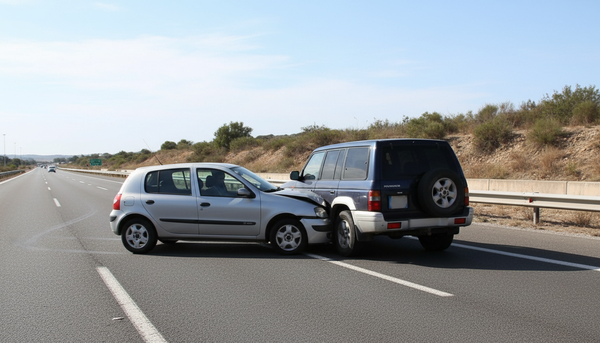
The distance covered from the moment a hazard is perceived until the vehicle comes to a complete stop is called...
Human factor: Reaction, braking, and stopping
Explanation
The **stopping distance** is the total space a vehicle travels from the moment the driver detects a hazard until the vehicle comes to a complete stop. This distance is the sum of two components: the **reaction distance** and the **braking distance**.
- **Reaction distance**: This is the space the vehicle travels from the moment the driver perceives a hazard, such as a red traffic light, until they begin to react, for example, by pressing the brake. This reaction time is usually about 0.75 seconds, although it can vary depending on the driver's reflexes and condition.
- **Braking distance**: This is the space the vehicle travels from the moment the driver presses the brake until the vehicle comes to a complete stop. This distance can vary depending on factors such as the vehicle's speed, the load it carries, the technical conditions of the vehicle (such as the state of the brakes and tires), the weather, and road conditions.
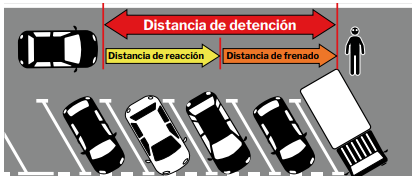
Therefore, the **stopping distance** is the correct term to describe the total space traveled from the moment a hazard is observed until the vehicle comes to a complete stop.
Select an answer
Keep going with more translated questions, explanations and full tests in the app.