What value do we obtain by dividing the distance travelled by the time taken to cover that distance?
Human factor: Reaction, braking, and stopping
Explanation
To understand why **average speed** is the data we obtain by dividing the distance traveled by the time taken, it is important to know some basic concepts about speed and distances.
- **Average speed**: It is calculated by dividing the total distance traveled by the total time taken to cover that distance. It is a measure that indicates, on average, how fast a vehicle has moved during a complete journey.
- **Stopping distance**: It is the total space a vehicle covers from the moment the driver detects an obstacle until the vehicle comes to a complete stop. This distance includes both the **reaction distance** and the **braking distance**.
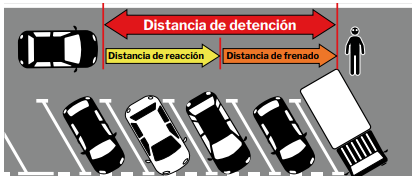
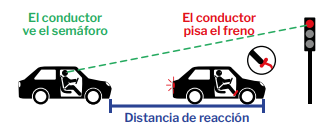
- **Reaction distance**: It is the space the vehicle covers from the moment the driver perceives an unexpected event until they begin to react, for example, by pressing the brake. This distance depends on the vehicle's speed and the driver's reaction time.
- **Braking distance**: It is the space the vehicle covers from the moment the brake is applied until it comes to a complete stop. This distance varies according to the speed, the vehicle's load, the vehicle's technical conditions, the weather, the road conditions, and the driver's characteristics.
In summary, by dividing the distance traveled by the time taken, we obtain the **average speed**, which is a measure of the vehicle's average movement over a journey. Other options, such as minimum or maximum speed, are not calculated in this way.
Select an answer
Keep going with more translated questions, explanations and full tests in the app.