In the event of an accident, when the seat belt is loose despite being fastened...
Traffic safety: Transported persons and cargo
Explanation
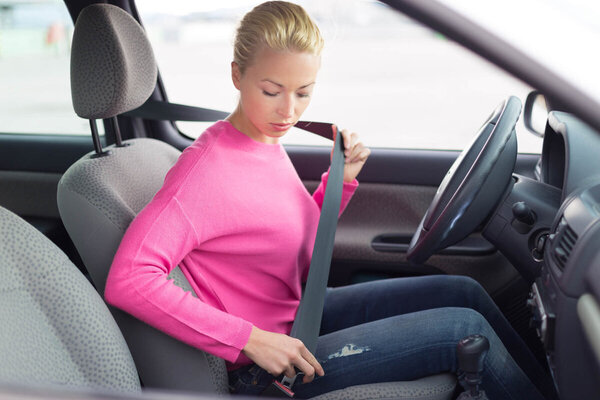
The seat belt is a crucial **passive safety element** in a vehicle, designed to protect occupants in the event of an accident. To be effective, it must be **properly fastened and adjusted to the body**. This means it should not be too loose or too tight.
- **Chest strap**: It should pass over the collarbone, between the shoulder and the neck, and go down the center of the chest. If it is incorrectly positioned, it can slip and reduce its protective capacity.

- **Lap belt**: It should be over the hip bones, not over the stomach, to avoid serious internal injuries in the event of an accident.
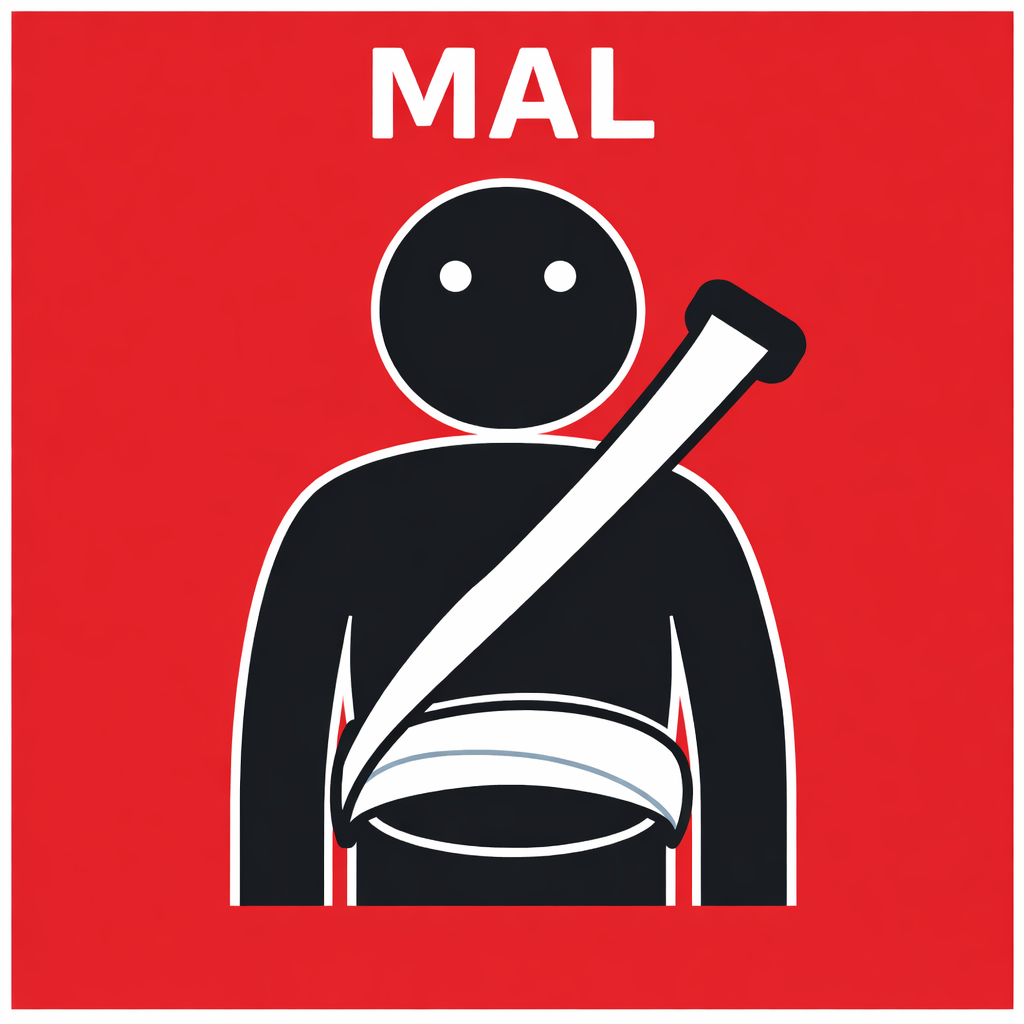
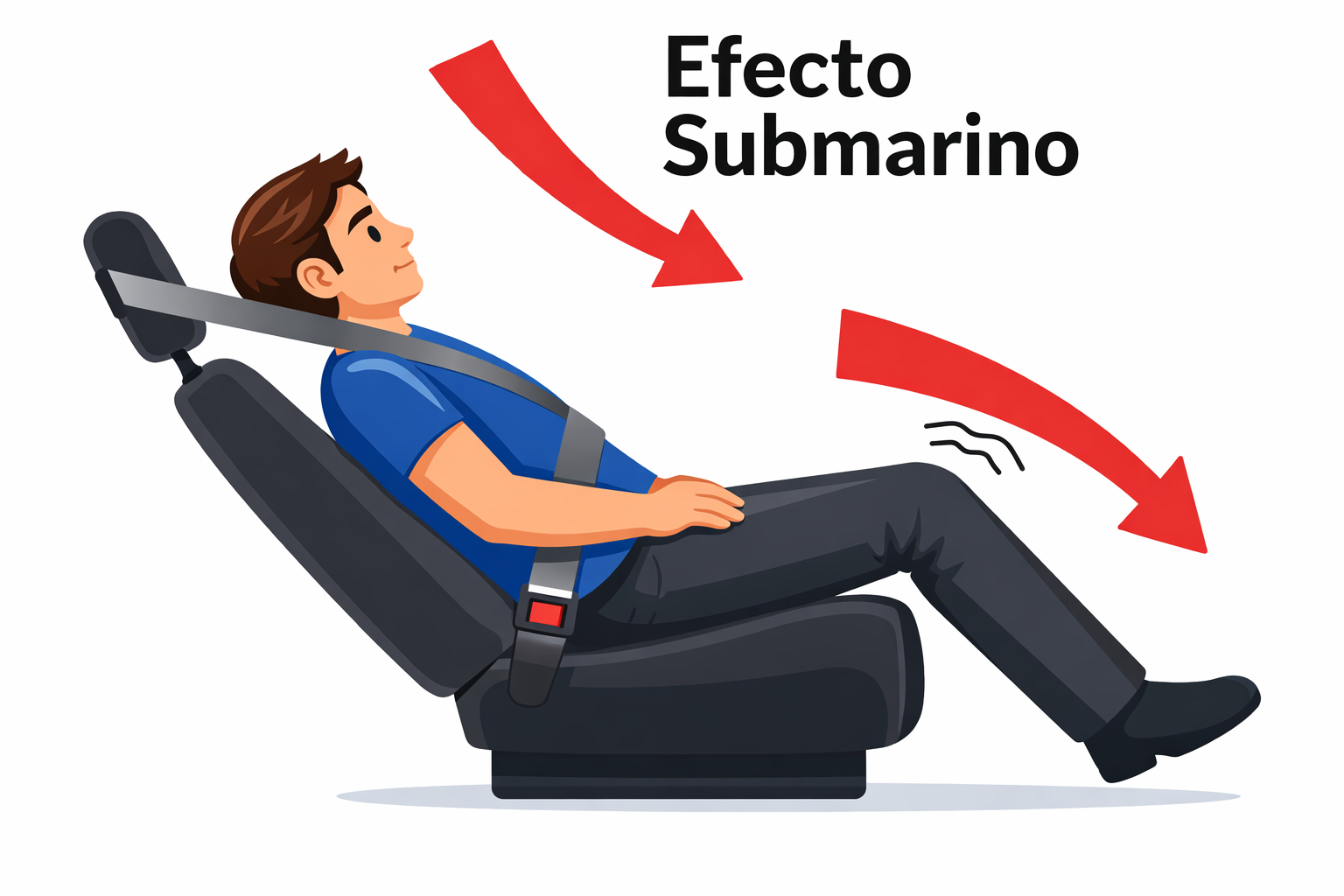
If the seat belt has **slack**, the body can slide forward during an impact, increasing the distance traveled inside the vehicle. This increases the risk of **hitting the steering wheel or windshield**, which can cause serious injuries. Additionally, a poorly adjusted belt can contribute to the **submarining effect**, where the body slides under the belt, further reducing its effectiveness.
Therefore, it is essential to ensure that the seat belt is well adjusted and correctly positioned to maximize its protective capacity in the event of an accident.
Select an answer
Keep going with more translated questions, explanations and full tests in the app.