May a vehicle’s load extend beyond the vehicle’s footprint?
Traffic safety: Transported persons and cargo
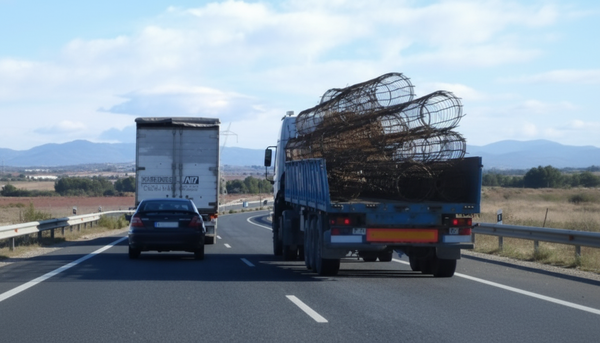
Explanation
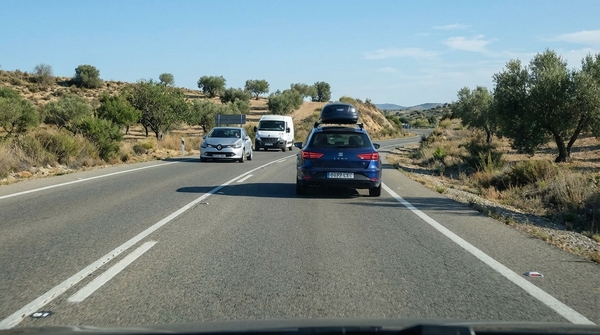
The **general rule** states that the load of a vehicle must not protrude beyond its footprint, meaning it should not be wider, taller, or longer than the vehicle itself. This means that, under normal conditions, the load must be contained within the dimensions of the vehicle.
However, there are **exceptions** for certain types of vehicles and loads:
- **Vehicles transporting goods**: If the load cannot be folded or divided, such as pipes or beams, it may protrude under specific conditions. For example, in vehicles less than 5 meters long, the load may protrude one-third of the vehicle's length. In longer vehicles, it may protrude up to 2 meters at the front and 3 meters at the rear.
- **Vehicles also transporting passengers**: The load cannot protrude at the front or sides, but it can at the rear if it meets certain conditions. For example, divisible loads may protrude 10% of the vehicle's length, while non-divisible loads may protrude 15%.
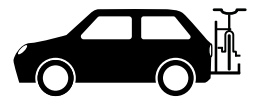
In summary, although there are specific situations where the load may protrude, the general rule is that it should not. Therefore, the correct answer is that, as a general rule, the load must not protrude from the vehicle.
Select an answer
Keep going with more translated questions, explanations and full tests in the app.