If, due to an emergency, a car is immobilised on the carriageway, must you place the warning triangles?
Vehicle immobilizations
Explanation
When a **car becomes immobilized on the roadway** due to an emergency, such as an accident or a breakdown, it is important to follow certain steps to ensure the safety of all occupants and other drivers on the road.
- **Turn on the hazard lights**: This is essential to alert other drivers that there is a vehicle stopped on the road. The hazard lights should be turned on in highways, expressways, and places with low visibility.
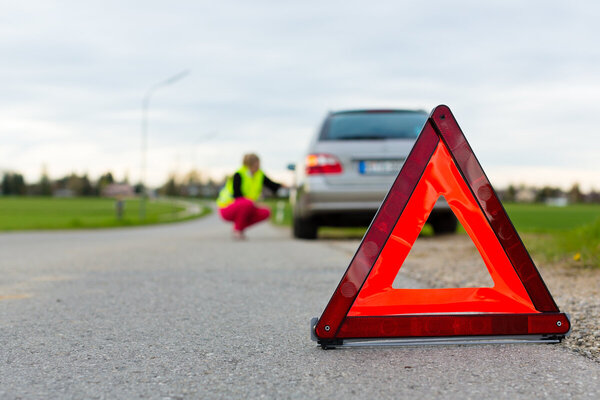
- **Place the warning triangles**: Even if you have already turned on the hazard lights, it is mandatory to place the warning triangles. These should be positioned 50 meters from the vehicle, one in front and one behind, on the right side of the road, and must be visible from 100 meters away. This provides an additional warning to approaching drivers, increasing safety.
- **Use the pre-warning light**: In addition to the triangles, it is mandatory to place a pre-warning light (orange light) on the car to indicate that it is stopped.
- **Exit the vehicle safely**: Occupants should exit the vehicle and position themselves in a safe place, wearing reflective vests. If there is no safe place, they should remain inside the vehicle with the seatbelt fastened.
Therefore, even if you have turned on the hazard or position lights, it is necessary to place the warning triangles to comply with road safety regulations.
Select an answer
Keep going with more translated questions, explanations and full tests in the app.