On a one-way carriageway, how should you place the warning triangles?
Vehicle immobilizations
Explanation
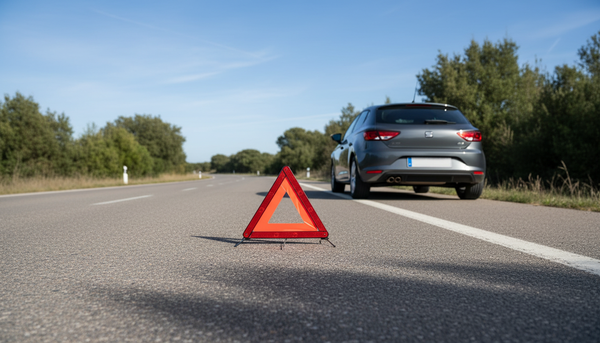
To ensure safety on a **one-way road** when a vehicle is stopped due to an emergency, it is important to follow the appropriate signaling rules. In this case, a **warning triangle must be placed behind the vehicle at a minimum distance of 50 meters**. This allows approaching drivers enough time to see the obstacle and react appropriately.
- **One-way road**: On this type of road, traffic moves in only one direction, so it is only necessary to warn vehicles coming from behind the stopped vehicle.
- **Distance of 50 meters**: Placing the triangle at this distance ensures it is visible from at least 100 meters, providing drivers enough time to slow down or change lanes if necessary.
It is important to remember that, in addition to the triangle, the hazard lights should be turned on and, if possible, a warning light should be placed on top of the vehicle to increase visibility. These measures help prevent accidents and maintain road safety.
Select an answer
Keep going with more translated questions, explanations and full tests in the app.