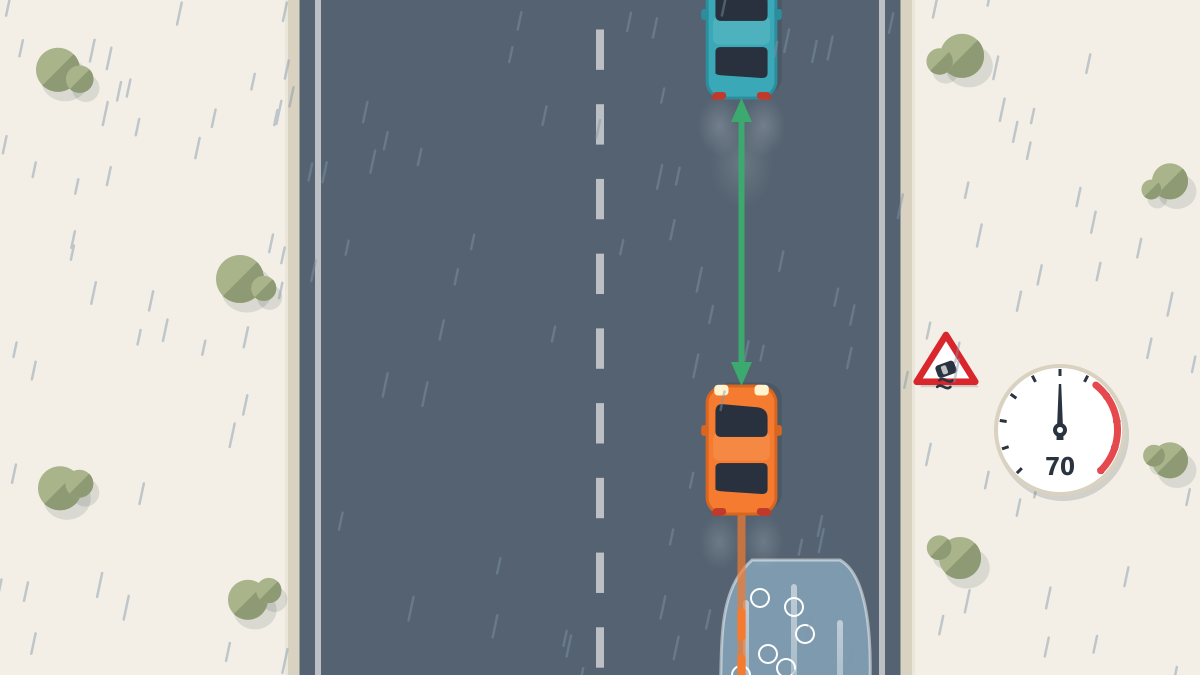
It's pouring, and water is shining in the ruts ahead. The car in front throws up a cloud of spray, and you're following it at the same speed. You drive into the water and the steering suddenly goes light.
What to notice
- Smooth, shiny water in the ruts or a puddle across half the lane is where tyres lose grip: steer around it while you still can.
- Lots of spray from the cars ahead means there's a lot of water, and it starts sooner than you can see.
- If the steering goes light, the tyres sound different and the car responds late, you're already aquaplaning.
- Braking or turning hard on the water only makes things worse: the car will pull to one side.
What to do
- Decide everything before the water: ease off smoothly, open up the gap and finish any lane change while the tyres still grip the tarmac.
- If you're already in it and the steering has gone light, hold the wheel straight and don't brake: come off the accelerator slowly and wait a couple of seconds.
- When the tyres bite again, correct your line with a small movement of the wheel, without jerking it.
- If the lane is flooded or there's too much water, don't go in: take the nearest exit or wait out the downpour off the road.
- If you're forced to stop on the shoulder, switch on your hazards and put out the V-16 beacon.