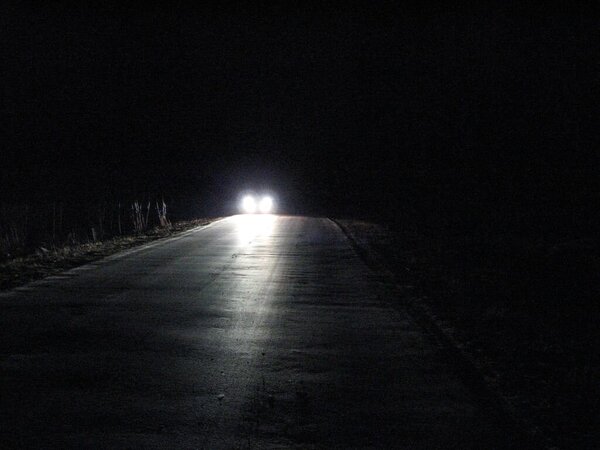
In the event of a failure of one of the vehicle’s lighting devices, are you allowed to drive at night with lighting of lower intensity?
Lighting
Explanation
To drive at night with a malfunctioning lighting device, it is important to follow certain precautions to ensure safety. Here we explain why it is possible to continue, but with conditions:
- **Reduction of speed**: If any of the vehicle's lights fail while driving, you must **reduce speed**. This is crucial to ensure that you can stop the vehicle within the area illuminated by the lights that are still working. Driving slower gives you more time to react to any obstacles or unexpected situations on the road.
- **Use of functioning lights**: Although the remaining lights may have a **lower intensity**, it is important to turn them on to improve visibility for both you and other drivers. This helps other vehicles see you and prevents possible accidents.
- **Lighting conditions**: If you find yourself on a poorly lit road, where you cannot read the license plate of the vehicle in front at 10 meters or do not see a dark vehicle at 50 meters, it is even more critical to reduce speed and use the available lights.
- **Stop in a lit area**: Once you reach a well-lit area, you should **park the vehicle** and not continue driving until the lighting system is repaired. This ensures that you do not put yourself or other drivers at risk.
By following these guidelines, you can continue your journey safely until you can fix the problem with the vehicle's lights.
Select an answer
Keep going with more translated questions, explanations and full tests in the app.