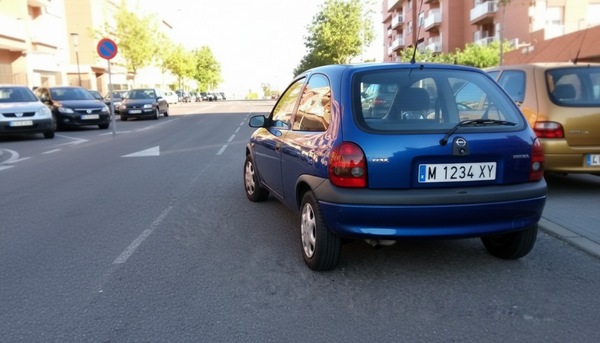
What should we do if, when performing the reversing maneuver, the traffic situation is not favorable?
Reversing

Explanation
To perform a **reverse maneuver**, it is essential to ensure that the traffic situation is safe. If not, the most prudent action is to **refrain from performing the maneuver and wait for the right moment**.
- **Safety first**: Before reversing, you must check that there is no danger to other drivers or pedestrians. This involves observing the traffic and the road, both directly and through the rearview mirrors. If you detect any risk, such as the approach of another vehicle, a person, or an animal, you must stop immediately.
- **R.S.M. safety rule**: This rule emphasizes the importance of observing, signaling, and performing the maneuver only when it is safe. If the situation is not favorable, it is better to wait until you can perform the maneuver without endangering others.
- **Prohibitions and limitations**: Reversing is prohibited on highways and expressways, and it is only allowed in specific situations, such as when parking or when it is not possible to move forward. Additionally, you should not reverse more than 15 meters or enter an intersection in reverse.
In summary, if the traffic is not favorable, the correct action is to wait until you can perform the maneuver safely, avoiding any risk to yourself and others.
Select an answer
Keep going with more translated questions, explanations and full tests in the app.