Are the signals drivers make with their arm valid?
Signage: General rules
Explanation
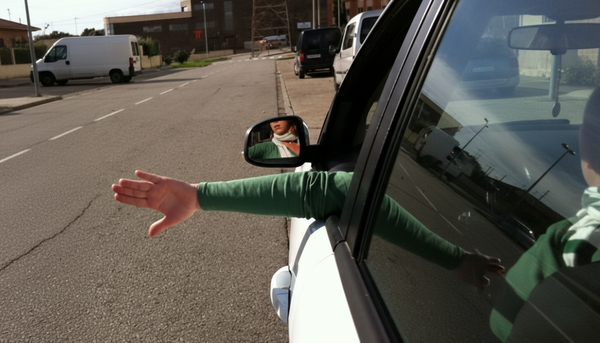
The signals that drivers make with their arm are valid **only when they are clearly visible**. This is important to ensure that other drivers and pedestrians can clearly understand the intentions of the driver making the signal.
- **Visibility**: The signals must be visible so that other road users can react appropriately. If the signal is not clearly visible, it can cause confusion and increase the risk of accidents.
- **Clarity in communication**: Just like the signals from traffic officers, which must be visible from a considerable distance, drivers' signals must also be clear and visible to be effective.
- **Examples of arm signals**:
- To change lanes or direction, the driver extends the arm in different positions according to the desired direction.
- To indicate reversing, the arm is extended horizontally with the palm facing backward.
- To signal braking, short and quick up-and-down movements are made with the arm.

In summary, the effectiveness of arm signals depends on their visibility. If they are not clearly visible, they will not fulfill their purpose of communicating the driver's intentions to other road users.
Select an answer
Keep going with more translated questions, explanations and full tests in the app.